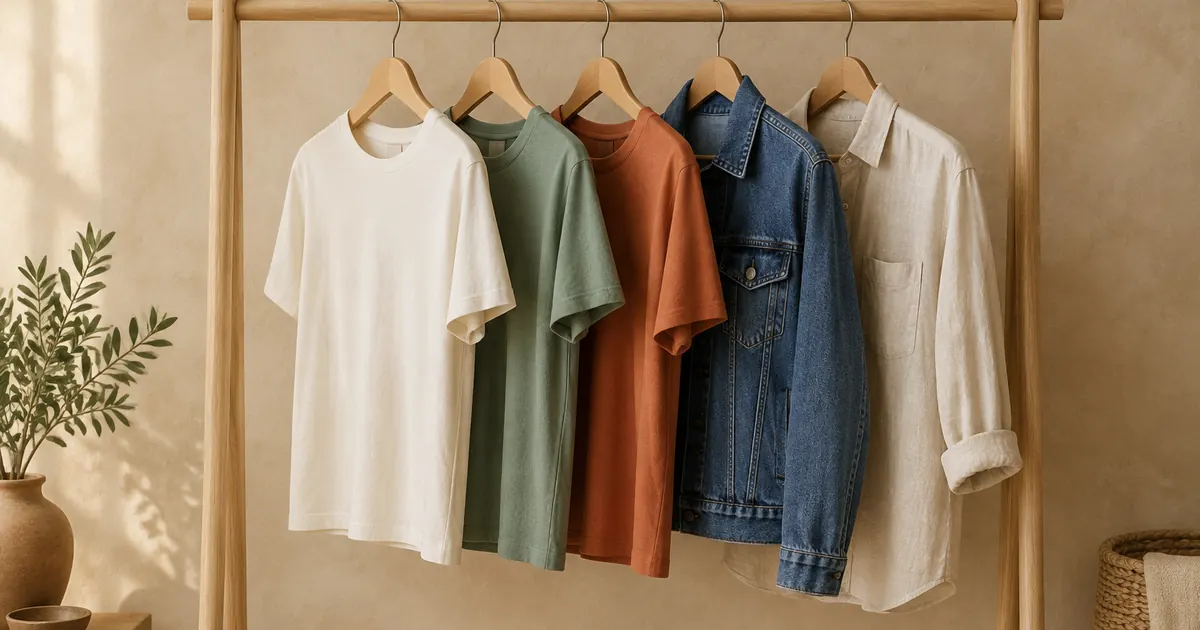
Sustainable fashion spent a decade as a marketing word. In 2026 it is finally a set of concrete, checkable practices — and the trends that matter are the ones you can verify on a product page, not in an ad. Here is what is actually changing in everyday clothing this year, and how our catalog already reflects it.
Recycled Synthetics Go Mainstream
The biggest shift is recycled nylon and polyester moving from niche eco-brands to everyday basics. Our recycled nylon bomber is the example we like to point to: post-consumer nylon re-spun into a shell that performs identically to virgin fabric, at a normal price. The practical benefit for you is a jacket with the same durability and weather resistance, with a fraction of the virgin-plastic footprint.
The checkable detail: listings that name the recycled content. Vague "eco-friendly" claims without a fiber breakdown are the new greenwashing tell.
Organic Cotton as the Default, Not the Upgrade
Organic cotton started as a premium upsell. This year it is the baseline for good basics — our organic crew neck line sits at the same price point as conventional cotton did two years ago. Two forces drove it: scale in the supply chain, and shoppers who now read the fiber label the way they read a nutrition label.
What to watch: organic certification applies to the farming, not the whole factory. The strongest listings pair organic fiber with transparent manufacturing notes — and the weakest just print a leaf on the tag.
Durability Is the New Luxury
The quiet trend underneath everything: people are buying fewer, better clothes and wearing them longer. Reinforced collars, dense knits, garment measurements published openly — these are durability signals, and they matter more than any certification. A tee you wear eighty times beats an organic tee you wear eight.
This is why our buying guide spends more time on knit density and collar construction than on certifications. Construction is verifiable in your hands; slogans are not.
Fit Inclusivity Beyond the Size Run
Sustainability includes keeping clothes in use — which means fits that work for more bodies. The trend this year is honest garment measurement charts and fit notes on every product page, so people order once instead of return-shipping three sizes across the country. Returns are not just a cost problem; every round-trip package is a carbon event. Getting fit right the first time is the least glamorous and most effective sustainability practice in e-commerce.
Unisex Cuts and Shared Wardrobes
More of the line is genuinely unisex — the anoraks, windbreakers and bombers are cut on shared blocks with sizing that runs to 3XL. Fewer garment categories means simpler production runs, less overstock, and wardrobes that can be shared within a household. It also happens to be how the best workwear has always been designed.
Tax-Free, Ship-Free, Keep-Forever
The last trend is commercial rather than fabric: honest pricing. Free shipping, no sales tax, and sale prices that are the real prices — no inflated compare-at theater. Durable clothing only beats fast fashion on cost if the pricing is transparent, and 2026 shoppers have fully caught on to the fake-discount game.
What to Buy Into This Year
If you are updating a wardrobe sustainably this year, the highest-impact moves are boring: two or three organic cotton tees you will actually rotate, one recycled-shell jacket for the shoulder seasons, one pair of denim that fits from the measurement chart, and a heavyweight hoodie that survives the dryer. Buy once, wear for years, and let the trend cycle pass you by — that is the whole strategy.
How to Spot Real Sustainability Claims
With the trend comes the noise. Three checks separate substance from marketing: first, fiber specificity — "70% recycled nylon" beats "eco-conscious fabric" every time. Second, care and repair information — a brand that publishes wash guidance and stands behind construction is planning for the garment's whole life, not just the sale. Third, price honesty — permanent "70% off" banners mean the original price was fiction, and fictional pricing funds nothing good in a supply chain.
The deeper shift is that durability itself became a selling point instead of a threat to repeat purchases. When a store tells you exactly how a garment is built — knit density, reinforced stress points, published measurements — it is inviting comparison. That transparency is the trend worth rewarding, this year and every year after.
Everything on this store ships free across the US, tax free, with 30-day returns. Start with the essentials and build from there.


