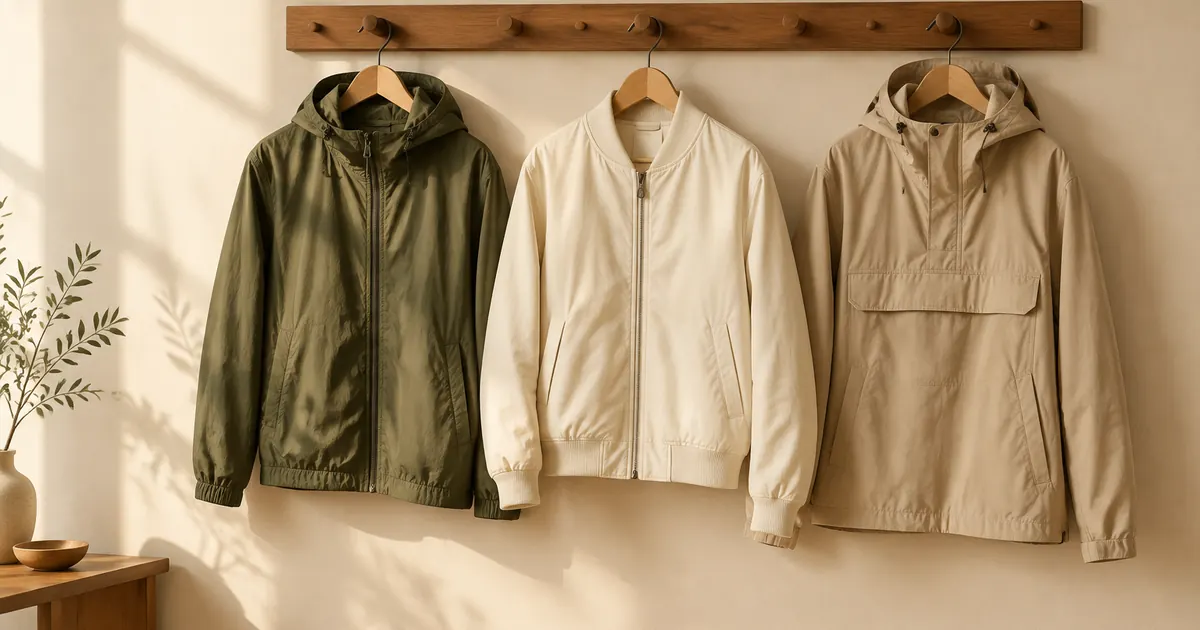
A jacket is the most visible thing you wear after your coat — and the piece most likely to be wrong for the weather. Here is a plain-English breakdown of the five jacket styles we carry in the Jackets & Outerwear collection, the season each one is built for, and how to layer them without bulk.
Spring: The Windbreaker
Spring weather is a wind problem more than a cold problem. A polyester windbreaker like our sporty windbreaker blocks gusts, packs into a gym bag, and shrugs off a drizzle. Wear it over a tee from March through May; add a hoodie underneath when the month turns. Look for a lined body (not just mesh), elastic or drawcord hem, and cuffs that cinch — those three details decide whether wind actually stays out.
Spring/Fall: The Bomber
The bomber is the great in-between jacket. Our recycled nylon bomber handles 45–65°F over a long-sleeve tee, with ribbed cuffs and hem that seal warmth in. The minimalist styling — no big logos, matte hardware — is deliberate: a bomber should finish an outfit, not shout over it. It is the jacket to grab when the windbreaker feels too thin but a coat is too much.
Rain and Wind: The Anorak
An anorak is a pull-over hooded shell, and it is the most weather-serious piece in the collection. Our fleece-lined anorak pairs a water-resistant shell with a warm lining, which makes it a genuine three-season piece: shell-and-fleece in one from late fall through early spring, and the half-zip vents heat when you hike. Choose an anorak when you want one jacket to cover walking the dog, waiting at the bus stop, and a wet Saturday.
Year-Round: The Utility Jacket
The utility jacket — four pockets, a slightly boxy cut, tough nylon-poly shell — is the do-everything layer. Our water-resistant utility jacket works over a tee in June evenings and over a hoodie in November. The four pockets earn their keep daily: phone, keys, wallet, gloves. If your wardrobe only has room for one jacket plus a winter coat, make it this one.
The Forever Piece: Denim
A relaxed denim jacket is not weather gear — it is a texture layer. Rigid denim blocks light wind and nothing else, but over a hoodie or flannel it is the best-looking third layer in clothing. The relaxed cut matters: you need room to layer a mid-weight hoodie underneath without the seams straining. Ours is cut for exactly that.
The Layering Formula
Think in three layers, each with a job:
- Base: a cotton or modal tee — moisture next to skin
- Mid: a hoodie or crewneck — insulation you can shed
- Shell: the jacket — wind and water defense
The rule that keeps it comfortable: each layer should be a different weight, and only one layer should be loose. A slim tee under a regular hoodie under a relaxed shell moves with you. Two loose layers bunch at the shoulders and make every jacket fit worse.
Temperature Cheat Sheet
Above 65°F: tee, maybe a windbreaker at night. 50–65°F: tee plus bomber or utility jacket. 40–50°F: tee, hoodie, anorak or utility. Below 40°F: the anorak earns its keep, or swap in a real winter coat and let the denim jacket live until spring.
Fit Notes for Layering
Jacket sizing for layering follows one rule: the shell is the thing you size. If you plan to wear a hoodie under a jacket most of the time, order the jacket with that in mind — a slim bomber over a heavyweight hoodie will pull at the seams no matter what size the hoodie is. Our product pages list the intended layering for each style: the windbreaker is cut trim (tee or long-sleeve underneath), while the anorak and utility jacket have room for a mid-layer built into the cut.
Sleeve length is the detail people get wrong most often. A jacket sleeve should end at the base of your thumb bone when your arms are relaxed — long enough to cover a shirt cuff when you reach forward, short enough that it does not swallow your hands. Check it with the layers you will actually wear, not over a bare tee.
Color Strategy for Everyday Jackets
Layering works hardest when the shell color is quiet. Black, olive, navy and tan pair with everything in a basics wardrobe — which is why our outerwear runs on exactly those four families. The exception worth owning is one piece with character: a vintage-wash denim jacket over a plain outfit does the work of a pattern without any pattern at all. If everything you own is neutral, one textured layer makes five outfits read like ten.
Every jacket in the collection ships free with 30-day returns — order your usual size, layer up inside the house, and send back what is not right.


