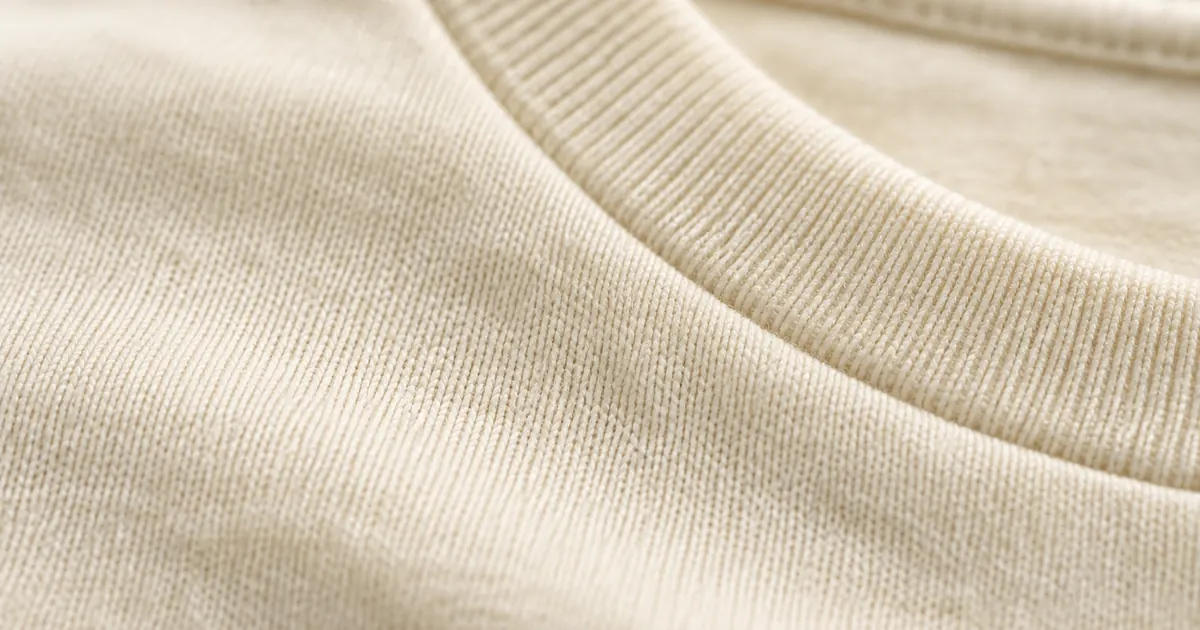
A good tee is the workhorse of any wardrobe. It is also the item most people overpay for or under-buy — grabbing a three-pack that loses its shape by wash five, or spending designer money on a label instead of fabric. Since nearly a third of our catalog is built on organic cotton tees, here is exactly what we look for when we choose them, and what you should look for anywhere you shop.
Start With Fabric Weight
T-shirt fabric is measured in grams per square meter (GSM) or ounces per square yard. Anything under 150 GSM (about 4.5 oz) is a lightweight summer tee — fine for hot days, but it will show wear faster. The sweet spot for an everyday tee is 160–200 GSM: substantial enough to hold its shape, light enough to wear under a jacket without bulk.
Heavier does not automatically mean better, though. A 220 GSM tee in July in the South is a sweatbox. Match the weight to how you will actually wear it.
Read the Knit, Not the Label
Two terms dominate tee construction, and they behave very differently:
- Jersey knit — the classic smooth tee. Soft from day one, drapes well, but can twist at the hem over years of washing.
- Ribbed knit — visible vertical lines, more stretch. Great for fitted styles like our ribbed tank, but check that the ribbing recovers — stretch a cuff and see if it snaps back.
Run your hand over the fabric inside and out. A dense, even knit feels almost flannel-smooth. A loose knit with visible gaps between loops will pill and stretch long before its time.
Why Organic Cotton Actually Matters
Organic cotton is grown without synthetic pesticides, which matters for the farms and watersheds where it is grown — and, honestly, for you. The longer-staple cotton varieties typically used in organic lines produce smoother, stronger yarn. That translates to a tee that stays soft through dozens of washes instead of turning crisp and scratchy.
What organic does not mean is indestructible. It is still cotton — it will shrink if you cook it in a hot dryer, and it will fade in a hot wash with denim. Our care guide covers the wash routine that keeps natural fibers alive for years.
Check the Collar First
If you can only inspect one detail on a tee, make it the collar. A quality crew neck has a ribbed collar with a visible tape or double-needle finish where it joins the body. Flip it inside out: you want to see clean cover-stitching, not a raw serged edge. A flimsy collar is the first thing to fail — it waves and stretches, and suddenly the whole tee looks tired even when the fabric is fine.
Our organic cotton crew necks use a reinforced ribbed collar for exactly this reason. It is the detail that separates a tee you wear weekly for three years from one you replace each season.
Shoulders, Hem, and Fit Math
Fit is where online tee shopping goes wrong most often. Three measurements tell you almost everything:
- Shoulder width — seam to seam. On a classic fit, this should land at or just past your actual shoulder bone.
- Chest — measured flat, doubled. Add 2–4 inches of ease for a relaxed cut.
- Body length — high shoulder point to hem. Crew necks look right when the hem hits mid-fly; cropped styles are a deliberate exception.
Every product page on this store lists garment measurements, not just letter sizes. Compare them to a tee you already love and you will almost never guess wrong.
The Price Question
A well-made organic cotton tee costs more than a three-pack of fast-fashion shirts — and less than three replacements of those shirts. When you can get a dense-knit, reinforced-collar organic tee in the $18–$25 range (our everyday price on most of the tees and tops collection), the math stops being close. Buy two good ones instead of five disposable ones. Your dresser drawer will be less crowded and your laundry routine simpler.
Quick Checklist
Before you order any organic cotton tee — ours or anyone's — run through this list: fabric weight 160–200 GSM for everyday wear, dense even knit with no visible gaps, ribbed collar with clean inside stitching, garment measurements published (not just S/M/L), and a care label that says cold wash. Five checks, thirty seconds, years of wear.
Neckline and Sleeve Details Worth Knowing
Beyond fabric, the small design choices decide how often a tee actually gets worn. A crew neck is the universal default and layers under everything. A V-neck elongates the neck and reads slightly dressier — our relaxed V-neck is the one we recommend when a tee needs to pass for smart-casual. A scoop neck sits lower and wider; it flatters under open shirts and jackets. Sleeve length matters too: a sleeve ending mid-bicep reads classic, while a longer, straight sleeve reads modern and works better on taller frames.
Also check the side seams. Tubular knitting (no side seams) is cheaper but twists after washing; a real side seam that runs from armpit to hem in a straight line keeps the tee square for years. Turn a tee inside out and look — it is a ten-second quality test that works in any store.
Ready to put it to work? Browse the full Tees & Tops collection — every style ships free, tax free, with 30-day returns if the fit is not right.


